
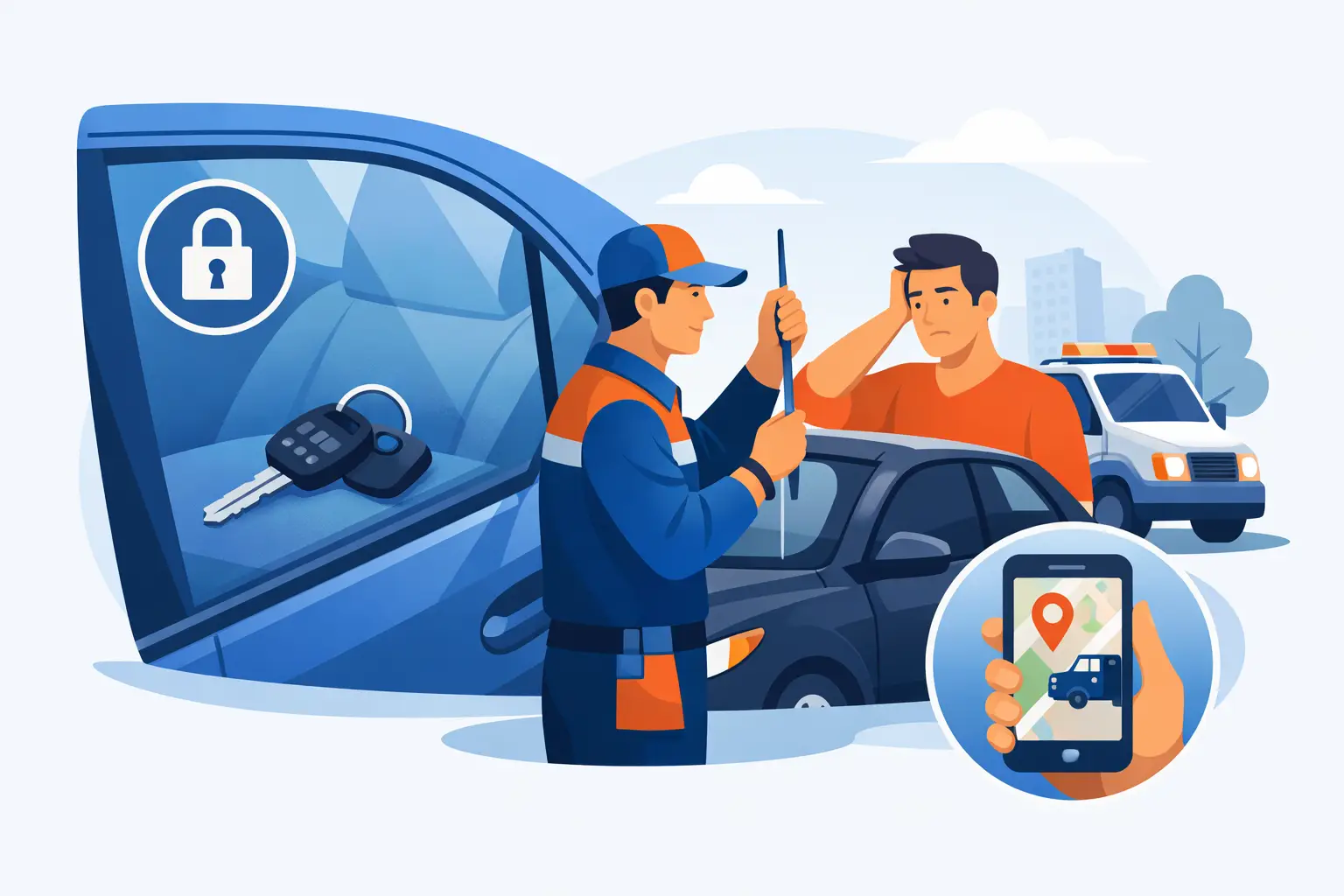
A locked vehicle can turn an ordinary stop for coffee, gas, or groceries into a stressful situation fast. If you are searching for locked keys in car help, the goal is simple: get back into your vehicle safely without damaging a door, window, lock, or key fob.
The fastest solution is not always the one that feels most obvious in the moment. A coat hanger, wire, or online trick may seem tempting, but newer vehicles have protected lock mechanisms, side airbags, electronic wiring, and weather seals that are easy to damage. A professional lockout service is often the safer and more affordable choice when you consider the cost of repairs.
First, Make Sure Everyone Is Safe
Before focusing on the keys, check the situation around the vehicle. If a child, pet, elderly passenger, or anyone who needs medical attention is locked inside, call 911 immediately. Colorado weather can change quickly, and a closed vehicle can become dangerously hot or cold.
If no one is inside, move to a safe, visible area away from traffic. Turn on your hazard lights if you are stopped on the roadside and can safely access them. If the vehicle is in a parking lot, stay nearby if possible, especially after dark, but do not put yourself at risk over the vehicle.
Take a breath before trying anything. Many lockout calls happen because the keys were placed in the trunk, left on the seat, or accidentally locked in after a door closed. A calm check of every door, the hatch, and the trunk release can save time. Just avoid forcing a handle or prying at a window.
What to Do When Keys Are Locked in Your Car
Start by checking whether a spare key is available. A family member, roommate, or trusted friend may be able to bring it to you. This can work well when you are close to home, but it may not be practical if you are stranded across town, late at night, or need to get moving right away.
Next, consider your vehicle’s connected services. Some manufacturers offer apps that can remotely open certain models, provided the account is active and your phone has service. This option depends on the make, model, subscription status, and whether the vehicle has enough battery power. It is worth trying, but do not rely on it as your only plan during an urgent lockout.
If neither option gets you in quickly, call a local roadside assistance provider. Give dispatch your exact location, the vehicle’s make and model, and any details that matter, such as keys visible on the seat, a key fob in the trunk, or a vehicle that is still running. Clear details help the technician arrive prepared and choose the safest entry method.
For drivers in Littleton, Centennial, Highlands Ranch, Castle Pines, Denver, or Lakewood, a local company can often make more sense than waiting through a national call center. You need someone who understands the area, communicates clearly, and treats the situation as the immediate problem it is.
Why DIY Lockout Methods Can Cost More
The internet is full of quick-fix lockout videos. Some show people using shoelaces, inflatable wedges, wire hooks, or improvised slim jims. These methods may appear easy on an older vehicle, but there is no one-size-fits-all approach to car locks.
Modern doors contain more than a latch. There may be sensors, wiring, side-impact components, window tracks, security systems, and soft weather stripping that keeps water and road noise out. Pushing tools into the wrong place can bend a frame, tear a seal, scratch paint, damage a lock rod, or trigger an expensive electrical issue.
Breaking a window is rarely the right answer when no one is trapped inside. Replacing automotive glass costs money, leaves sharp debris in the vehicle, and can expose the interior to weather or theft until repairs are made. It also creates a bigger problem than the original lockout.
A trained technician uses proper lockout tools and methods designed to reduce the risk of damage. There is still a difference between vehicle types, and a careful provider will assess the car before attempting entry rather than treating every lockout the same way.
Be Careful With Roadside Memberships and Insurance
Roadside coverage through insurance, a credit card, dealership plan, or auto club can be useful. Before waiting on it, check the estimated arrival time, lockout coverage limit, and whether you can choose a local provider. Some plans reimburse a service call after the fact, while others require dispatch through their network.
If you have an immediate safety concern, a child or pet in the vehicle, or you are stuck somewhere unsafe, focus on getting prompt help first. Paperwork can be handled once the situation is under control.
Information That Helps a Lockout Technician
When you call for help, a few details can make the process smoother. Be ready to share your location, including nearby cross streets, parking-lot name, building number, or a recognizable landmark. In large shopping centers and apartment complexes, your location can be more useful than the street address alone.
Explain the vehicle year, make, model, and color. Let the dispatcher know whether the keys are in the passenger compartment, trunk, or ignition, and whether the car is running. If you have a push-button start vehicle, mention that too. These details can affect the safest approach.
You should also be prepared to show proof that the vehicle belongs to you or that you are authorized to access it. A driver’s license, registration, insurance card, or digital documentation can help. This protects you, the vehicle owner, and the technician.
Locked Keys, Dead Battery, or Lost Key?
Not every vehicle access problem is the same. If the key fob does not respond and the doors will not open, the issue could be a dead vehicle battery or a weak fob battery rather than keys locked inside. Some vehicles have a hidden mechanical key inside the fob, along with a covered keyhole on the door handle. Your owner’s manual may explain where to find it.
If the keys are lost, stolen, or broken, a lockout service can help you access the vehicle, but you may also need a locksmith, dealership, or automotive key specialist for replacement and programming. If the vehicle is stranded and cannot be safely driven after entry, towing may be the next step.
That is why it helps to call a roadside provider with more than one way to assist. Ortiz Towing can respond to lockouts as well as jumpstarts, tire changes, fuel delivery, winchouts, and towing when the problem turns out to be bigger than a locked door.
Prevent the Next Car Lockout
Lockouts are common, even for careful drivers. A few small habits can lower the chances of another one. Keep a tested spare key with someone you trust rather than hidden on or under the vehicle. If your vehicle supports a mobile app, set it up before you need it and make sure you know your login information.
It also helps to pause before closing the door or trunk when loading groceries, sports gear, or work supplies. Put the keys in a pocket, bag, or another consistent place instead of setting them on a seat or cargo floor. For key fobs, replace weak batteries before they fail at the worst possible time.
Being locked out is frustrating, but it does not have to turn into vehicle damage or a long wait in an unsafe place. Stay where you are visible, avoid forced-entry shortcuts, and get qualified help that can return you to your vehicle with care.